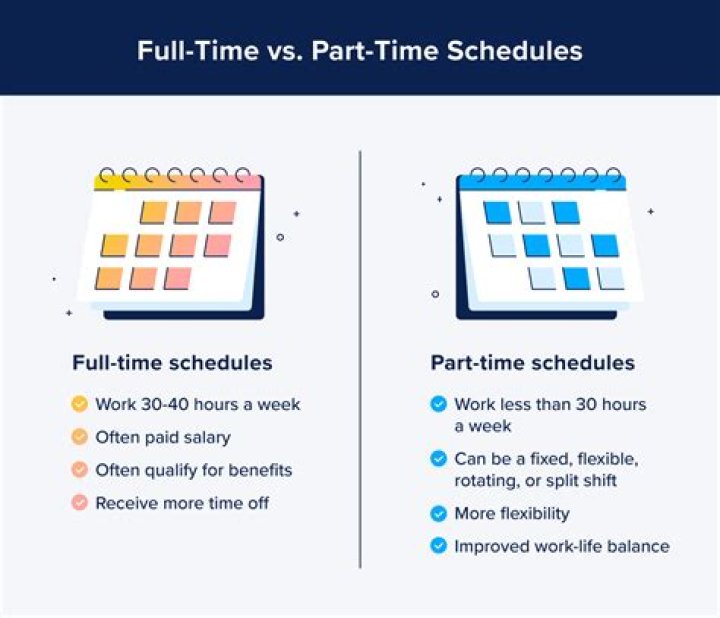
How many hours is full time in ND?

Isabella Floyd
Published Jan 14, 2026
A full-time employee is, for a calendar month, an employee employed on average at least 30 hours of service per week, or 130 hours of service per month.
What is overtime in North Dakota?
Generally, overtime is to be paid at 1-1/2 times the regular rate of pay for hours worked in excess of 40 in a work week (a consistent, consecutive 7 day period defined by the employer, unless the employer is a hospital or residential care establishment which may adopt a 14 day overtime period).
What is the minimum wage in North Dakota?
$7.25
For now, despite the fact that all of its neighbors have codified minimum wage increases, North Dakota’s will hold at $7.25, in lockstep with the federal standard.
Is it illegal to not pay overtime in North Dakota?
Non-exempt employees (including those paid a day rate) must be paid 1.5 times their regular hourly rate for all hours worked over 40 in a single workweek. Daily overtime is not required under North Dakota state law.
How many hours can you work in a week in ND?
Maximum hours per week: 18 per school week (any week in which school attendance is required any part of 4 or more days), 40 per non-school week. May work only between 7a.m.-7p.m. (until 9p.m. from June 1st – Labor Day).
An employee who customarily and regularly receives more than $30 per month in tips may be paid a minimum direct wage of $4.86 per hour, subject to some requirements. However, the tips earned plus the direct wage paid by the employer must equal the full minimum wage of $7.25 per hour for all hours worked.
How many hours do you get paid per pay period?
Bi-Weekly (Paid 26 times a year) is 2080 hrs / 26 times = 80 hours per pay period. Semi-Monthly (Paid 24 times a year) is 2080 hrs/ 24 times = 86.67 hours per pay period.
Is the 27th pay period a leap year?
This is a “pay period leap year,” and it affects salaried employees on a bi-weekly pay period. If the calendar lines up properly, the year will include a 27th pay period. Employers who are looking out far in advance can adjust employees’ paychecks so that their salary is divided equally into 27 payments rather than 26.