Does an hourly wage have benefits?

James Rogers
Published Jan 24, 2026
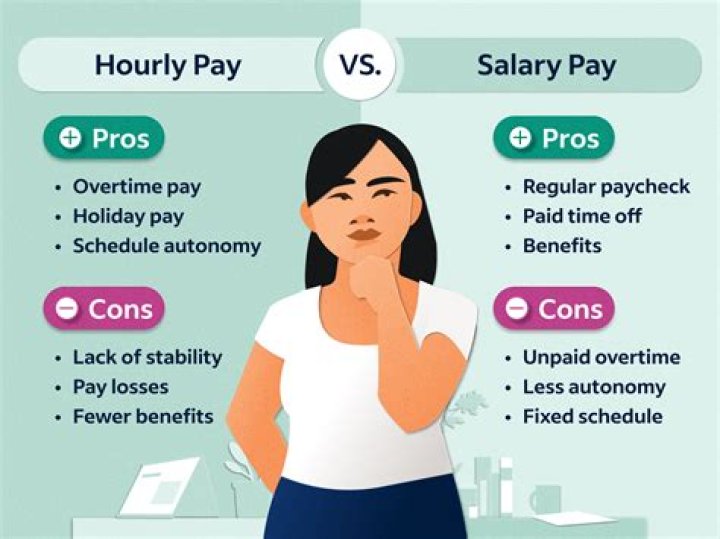
Employees on an hourly wage get paid an agreed-upon rate for each hour they work. Some hourly workers will receive company benefits, but this depends on their employer. However, the employer’s contribution will often be lower than that provided to salaried employees.
What are the benefits of salary vs hourly?
Salaried employees enjoy the security of steady paychecks, and they tend to pull in higher overall income than hourly workers. And they typically have greater access to benefits packages, bonuses, and paid vacation time.
How much do benefits add to hourly wage?
The national average of employee benefits cost For civilian workers, the average cost for employers paying for employee benefits equals $11.82 per hour, in addition to their average salary and wage which is $25.91 per hour. Taken together, the average total compensation is $37.73 per hour.
What are the advantages of working for a wage?
Benefits of waged pay Payment for hours: An advantage of an hourly wage is that employees get paid for the hours they actually work. This means that if a worker works for eight hours a day they get paid for the eight hours. If you ask an employee to work overtime, they’ll also get paid for that as well.
Do job benefits come out of your paycheck?
Other employee benefits If you sign up for your employer-provided health insurance, the cost will come out of your paycheck. Whatever amount you choose to contribute will be deducted from your paycheck as well.
What are the disadvantages of getting paid hourly?
Disadvantages of Hourly Rate Wage:
- Number of hours worked by the employees:
- No guaranteed salary per month:
- Lesser amount of extra work time:
- Wages are lost when an employee is absent due to medical reasons:
- Hour rate wage earners cannot determine their monthly payroll:
Do you get paid an hourly wage if you work long hours?
Employers may compensate employees, either by paying them an hourly wage or an annual salary. While salaried employees earn regular paychecks—even if they work long days during busy periods, certain hourly wage-earning employees are eligible for overtime pay, for hours worked beyond the standard 40-hour work week.
What are the perks of being an hourly employee?
Union-represented employees often have protection for benefits such as their pension that exempt employees lack. Alternatively, many salary jobs have perks that hourly employees do not have. These include more flexible schedules, leaving for the doctor and other appointments without losing pay, and the ability to work remotely .
When does an hourly employee become eligible for benefits?
During this time (no more than 90 days), the employer calculates an employee’s eligibility, discusses the employee’s status with them, and enrolls the employee in a benefit plan, if necessary. During this time (6-12 months and not shorter than the Standard Measurement Period), the employee is offered benefits if qualified.
How many hours does a salaried employee have to work?
While salaried employees sometimes find that they have to work more than 40 hours to get the job done, if some major event or order requires you to put in double that number of hours, flextime can help you regain work-life balance.